
Residential building
24.03.2026.
Residential building
PETRA KOČIĆA
Location:
Petra Kočića St., Vračar, Belgrade
Investor:
WINNIO DOO
Type:
Reconstruction and extension
Reconstruction and extension
GFA:
1.051,35 m2
1.051,35 m2
Year:
2025.
2025.
Number of floors:
B+S+Gf+2+Rf
B+S+Gf+2+Rf
Photographs
Description
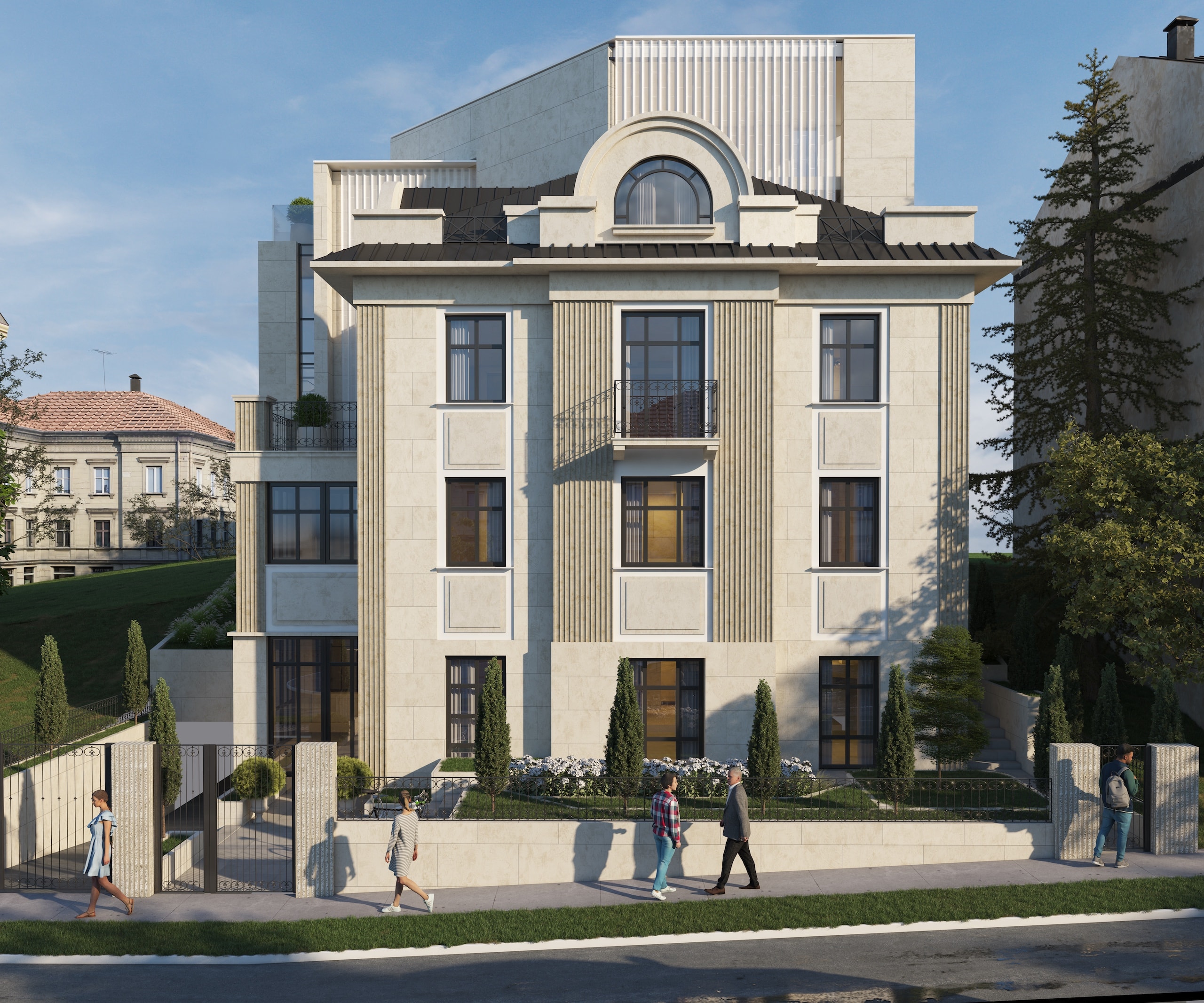
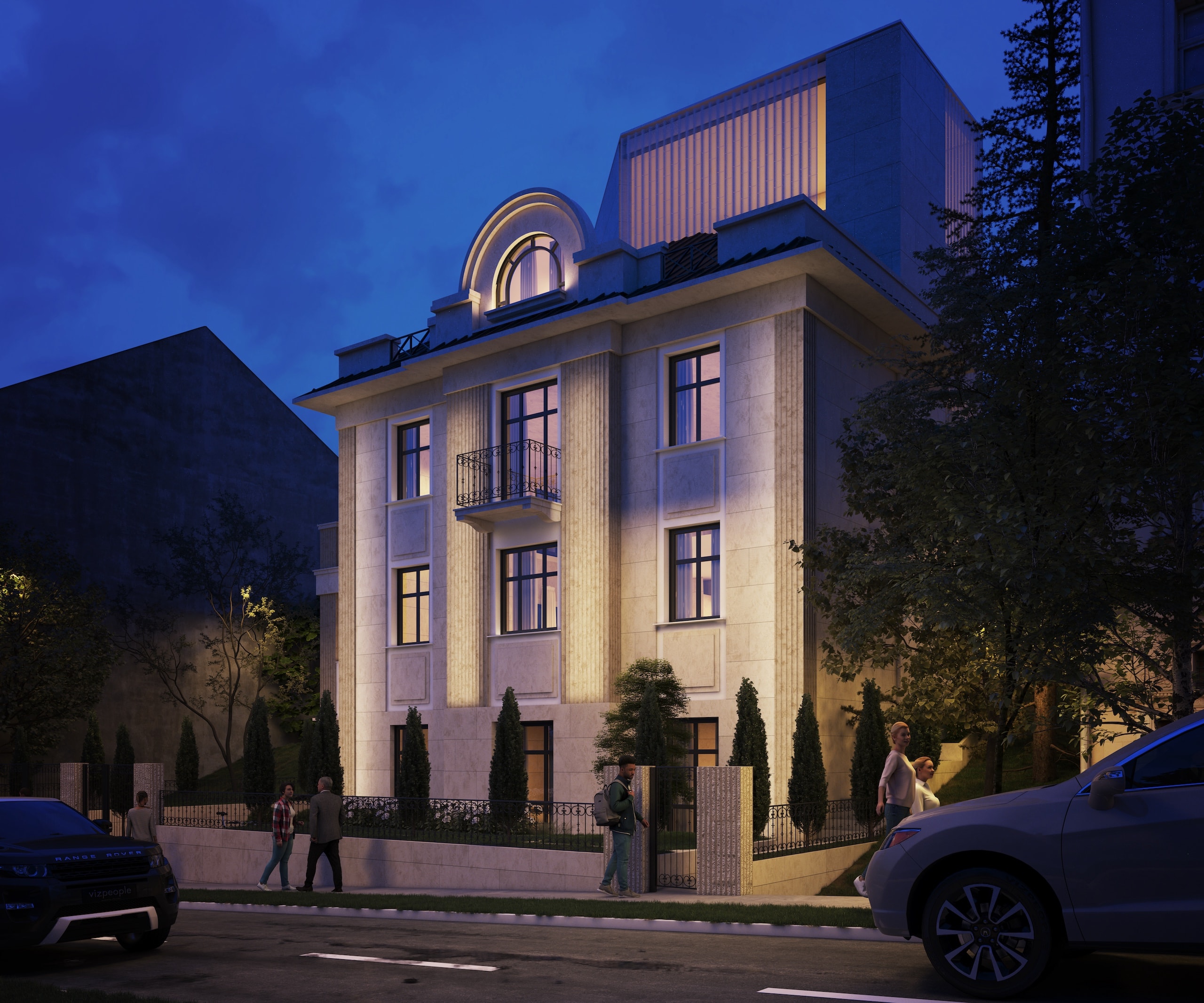
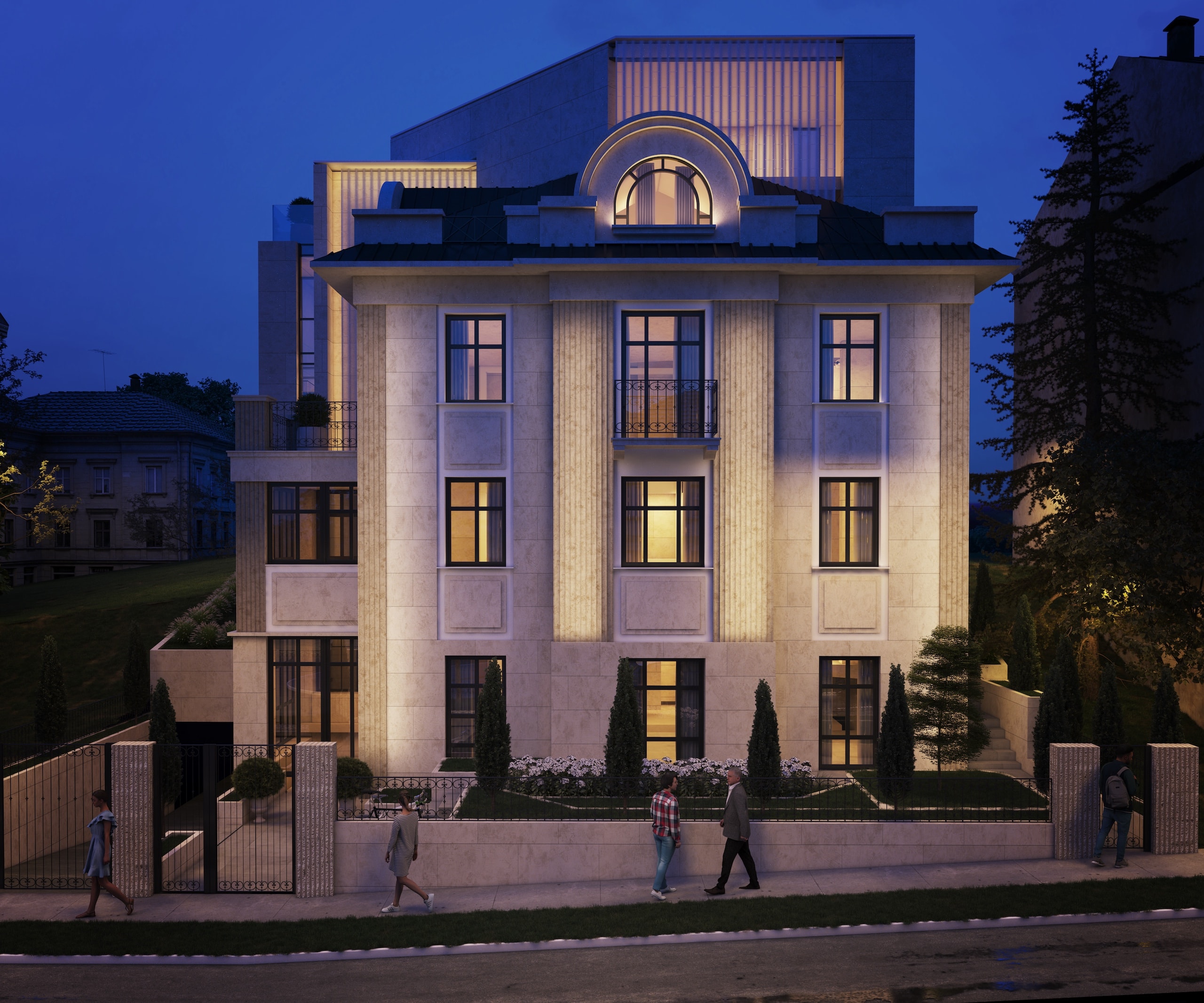
The intervention on the building in Petra Kočića Street in Neimar emerged as a response to the complex issue of contemporary living within a historic structure recognized as a property of special value, situated within a site currently undergoing the process of designation as a cultural heritage asset.
The original design of the house for university professor Nikolai Vasiliev was developed by the renowned architect and professor Mihailo Radovanović between 1926 and 1927. The building is a detached residential villa from the interwar period, shaped in the spirit of late academicism with influences of early modernism. Its massing and composition correspond to the typology of family villas built during the 1930s: it has a rectangular footprint, a layout of Ground Floor + 1 + Attic, with a pronounced central risalit on the street façade and a multi-pitched roof. Despite visible signs of deterioration and years of neglect, the façade elements have retained their original volume and recognizable architectural plasticity.
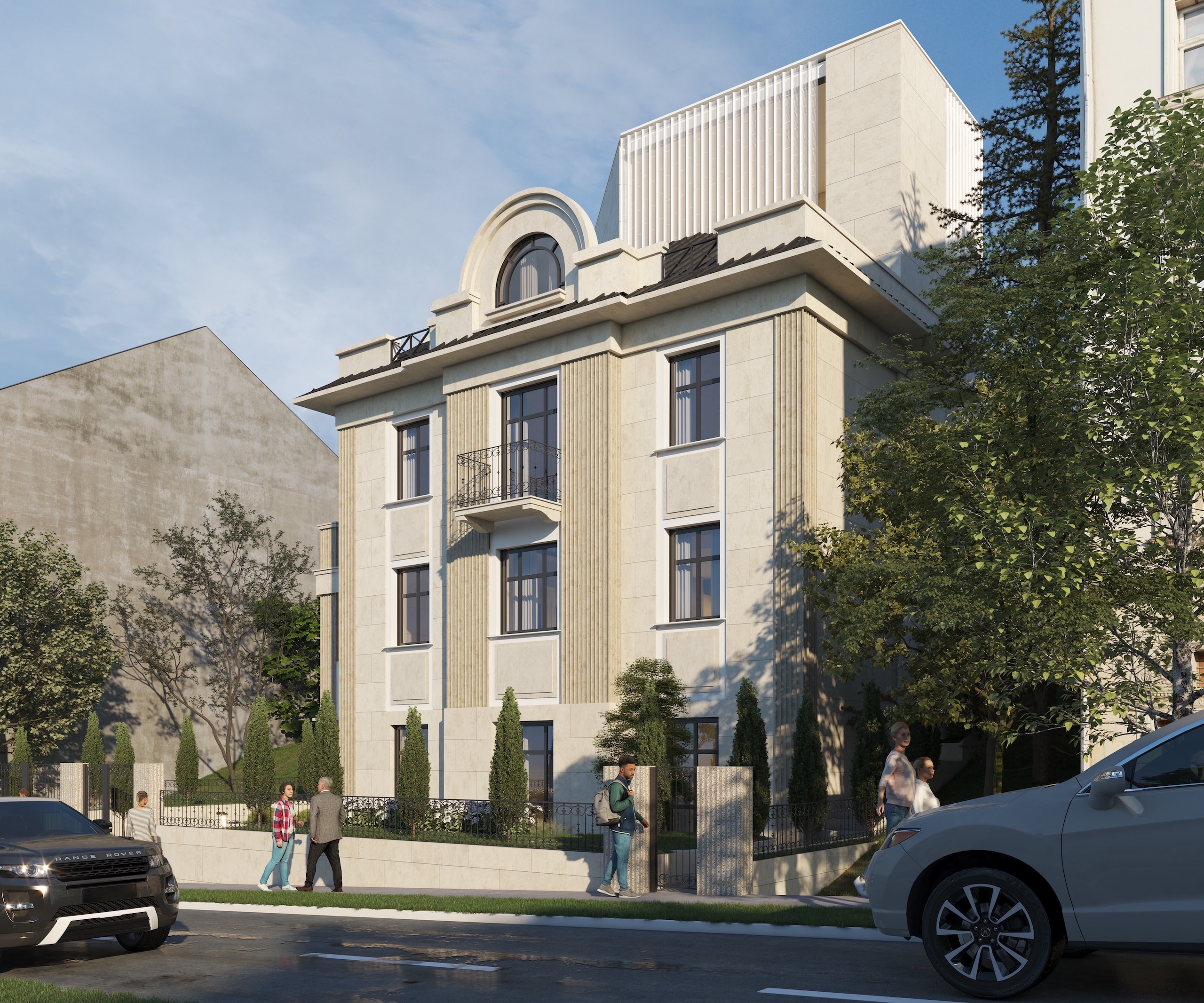
The new design concept for the existing structure, through reconstruction and extension, is grounded in full respect for the protected building, its ambient value, and historical significance, developed in collaboration with and under consultation with the Cultural Heritage Preservation Institute of Belgrade. The design approach for the new volumes is based on clear visual and material differentiation, allowing the authentic part of the building to retain its spatial dominance and recognizable street silhouette.
Through these interventions, the building is reconstructed and extended to a total configuration of B + S + Gf + 2 + Rf, accommodating four residential units and an associated garage with technical facilities in the underground levels. Although the visual legibility of the villa had been compromised due to prolonged neglect and unregulated surrounding development, its original architectural identity including the emphasized arched pediment, symmetrical façade composition, and vertical accents served as the key reference for shaping the contemporary expression.
The new design aims to create a cohesive and indivisible whole of old and new, where the contemporary segment enhances the existing architecture without visual conflict. Proportions, volumetry, and materialization of the extension have been carefully conceived so that the recessed new elements follow the vertical articulation of the authentic structure, avoiding any visual competition and deliberately yielding hierarchical primacy to the historic building within the overall composition.
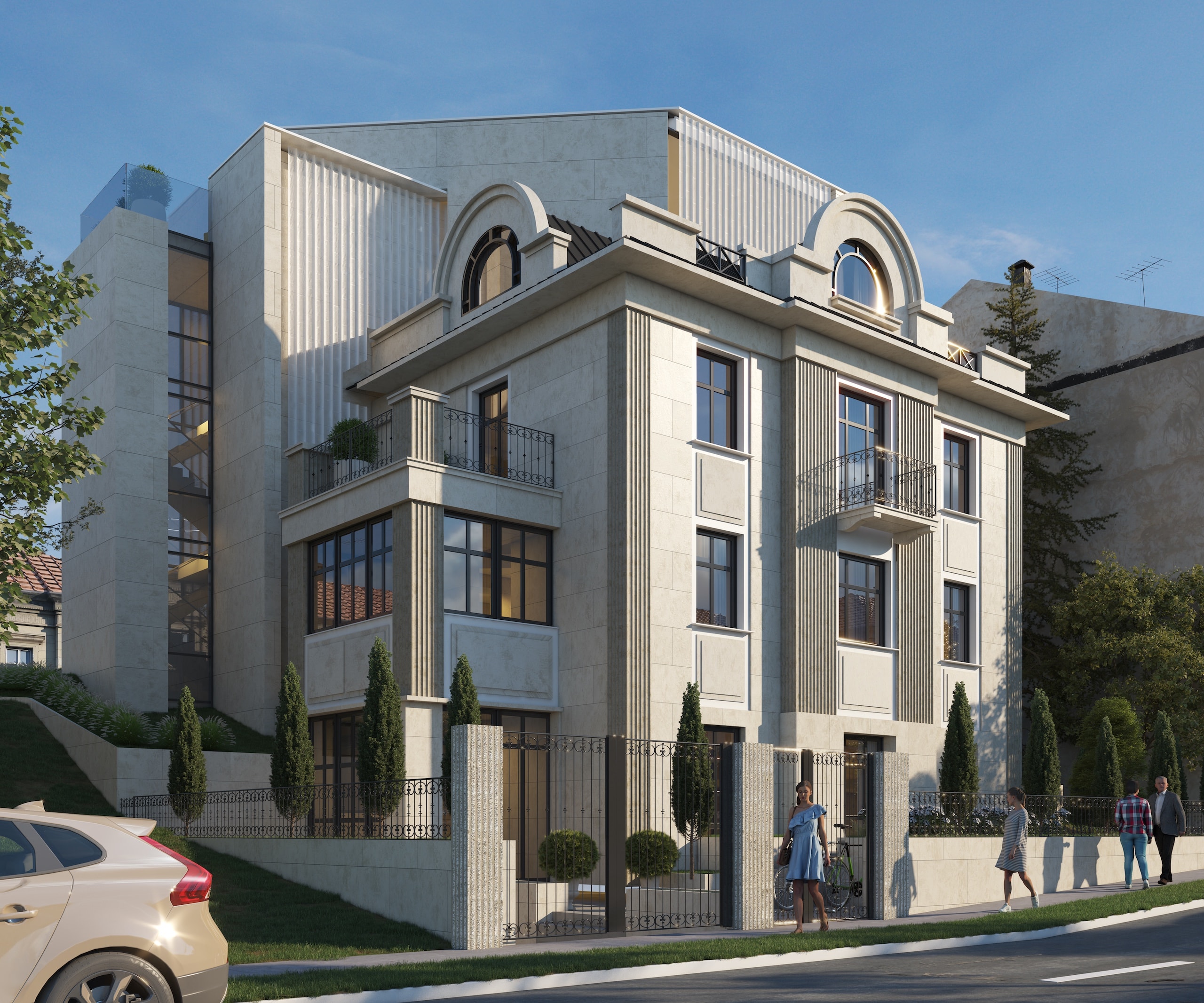
On the northwestern side of the existing structure, a new extension is proposed, articulated through a contemporary architectural language expressed in a pronounced vertical rhythm of lamellar structures that integrate window bands and deep shadows, resulting in a dynamic and materially refined intervention. The new elements are clearly distinguished from the primary volume, preventing a visual collision of epochs while contributing to the compactness and functionality of the overall composition. Despite its modern expression, the side annex remains unobtrusive in primary street views; the main façade retains its hierarchical primacy, while the new structure contributes to the spatial experience primarily from secondary viewpoints.
The functional organization of the building is oriented toward contemporary housing needs, while consistently preserving its defining characteristics. Greater flexibility of layout has been achieved, along with improved daylight access and enhanced interior spatial quality. Openings such as roof windows and those on terraces are discreetly integrated into the extension so as not to disrupt the authentic rhythm of the façade.
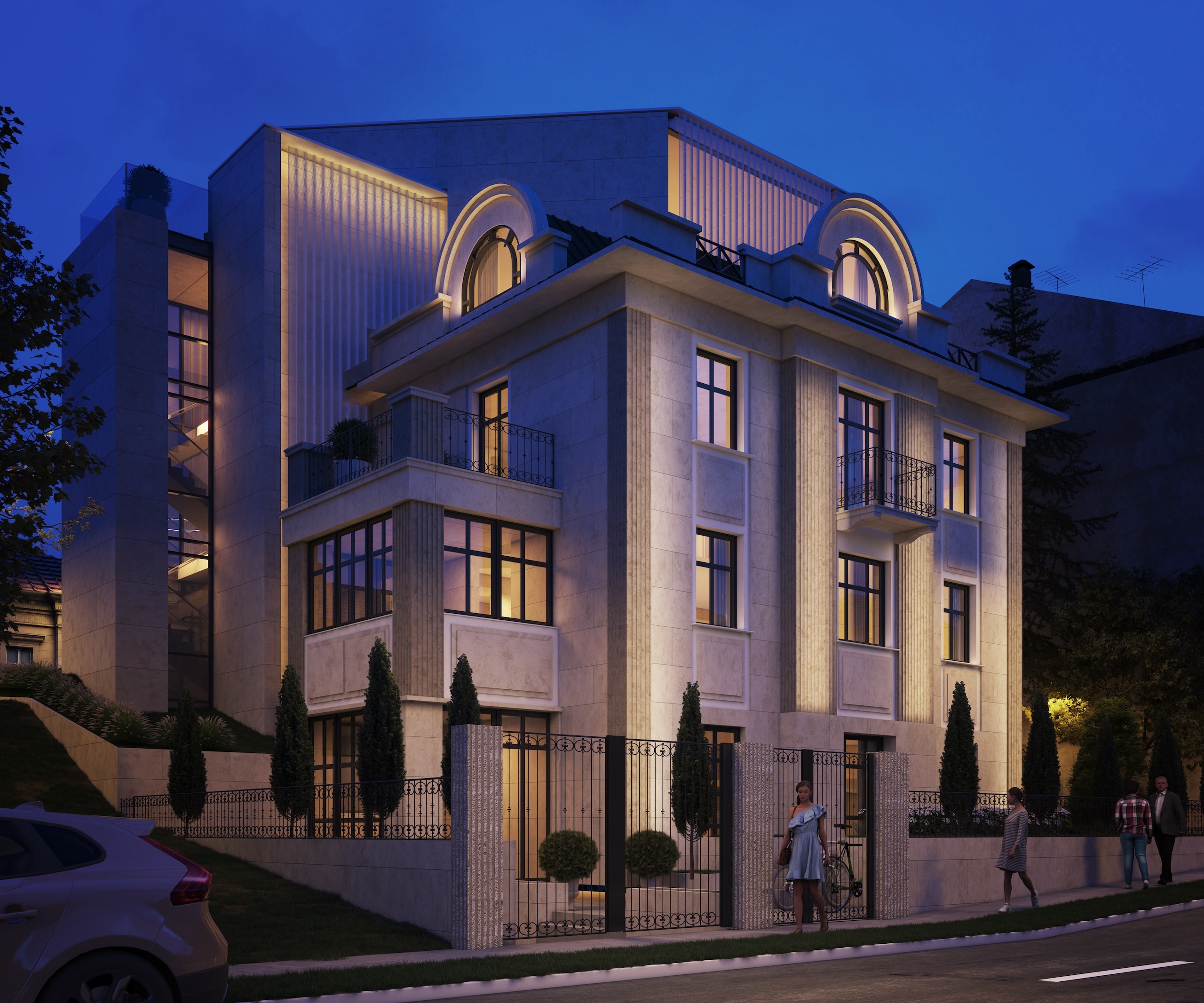
The connection between the interwar period and contemporary architectural expression is achieved through a modern reinterpretation of historical decorative elements. The characteristic fluting of the original pilasters is transformed into a contemporary motif of a double façade made of large-scale perforated metal panels. This approach introduces layered articulation, a dynamic interplay of light and shadow, and subtle ambient illumination, while preserving the privacy of interior spaces.
The façade treatment of the new segment is carefully articulated through three primary materials: dominant solid façade planes are executed in travertine stone, ensuring durability, visual warmth, and contextual continuity; perforated metal emphasizes rhythm and verticality; while glazed surfaces form a curtain wall that follows the building’s vertical geometry and establishes compositional balance with the solid planes.
The selection of materials and application of design principles are carefully subordinated to a contextual response to existing conditions, ensuring that each architectural element contributes to both visual and functional harmony, while optimizing natural lighting and privacy. The new design solution represents a successful synthesis of heritage preservation and contemporary architectural expression, demonstrating that a discreet yet clearly articulated intervention is achievable within a sensitive cultural-historical and ambient context.